

1. How 3D Printed Animals Are Reshaping Wholesale Inventories
The integration of additive manufacturing into the collectibles market has fundamentally altered how businesses approach inventory acquisition. By shifting away from traditional injection molding, wholesalers can now access highly detailed 3D printed animals without the burden of massive upfront tooling costs. This paradigm shift allows distributors to curate niche collections that cater to specific consumer demands, ensuring that shelf space is optimized for high-turnover items. The agility provided by this technology means that wholesale buyers are no longer forced to order thousands of identical units to achieve profitability.
Understanding the mechanics behind this shift reveals why businesses are aggressively adopting these production methods. Traditional manufacturing requires extensive lead times and rigid design lock-ins, whereas additive manufacturing thrives on flexibility. Wholesalers can now test new concepts in the market using small batch runs of 3D printed animal models before committing to larger orders. This mitigates financial risk and ensures that the product aligns perfectly with current consumer preferences. The result is a more dynamic, responsive supply chain that heavily favors data-driven procurement.
The impact on the end consumer further drives this wholesale transition. Modern collectors seek uniqueness and high fidelity, qualities that are inherently difficult to achieve with mass-produced plastic figurines. When businesses stock the best 3D printed animals, they are offering a product that feels premium, bespoke, and artistically superior. This perceived value directly translates into higher retail price points and improved profit margins for B2B buyers. The tactile quality and intricate geometries possible with advanced printing technologies create a distinct competitive advantage in a crowded retail environment.
Looking at the broader economic picture, this manufacturing evolution represents a permanent shift in how physical goods are conceptualized and distributed. The barrier to entry for creating complex zoological replicas has been drastically lowered, allowing specialized wholesalers to compete with legacy toy manufacturers. As production speeds continue to increase and material costs decrease, the viability of using 3D printed animals as a primary wholesale offering will only solidify. Businesses that fail to integrate these advanced models into their catalogs risk losing market share to more agile competitors.
1.1 Why Retailers Are Transitioning to 3D Printed Animal Models
The primary driver for retailers moving toward additive manufacturing is the unparalleled economic efficiency it provides for complex geometries. Traditional methods require expensive molds that degrade over time, making the production of highly detailed 3D printed animal models cost-prohibitive at lower volumes. By leveraging additive processes, retailers can bypass these tooling expenses entirely, allocating capital toward marketing and product development instead. This financial fluidity allows for a more diverse and rapidly expanding product catalog.
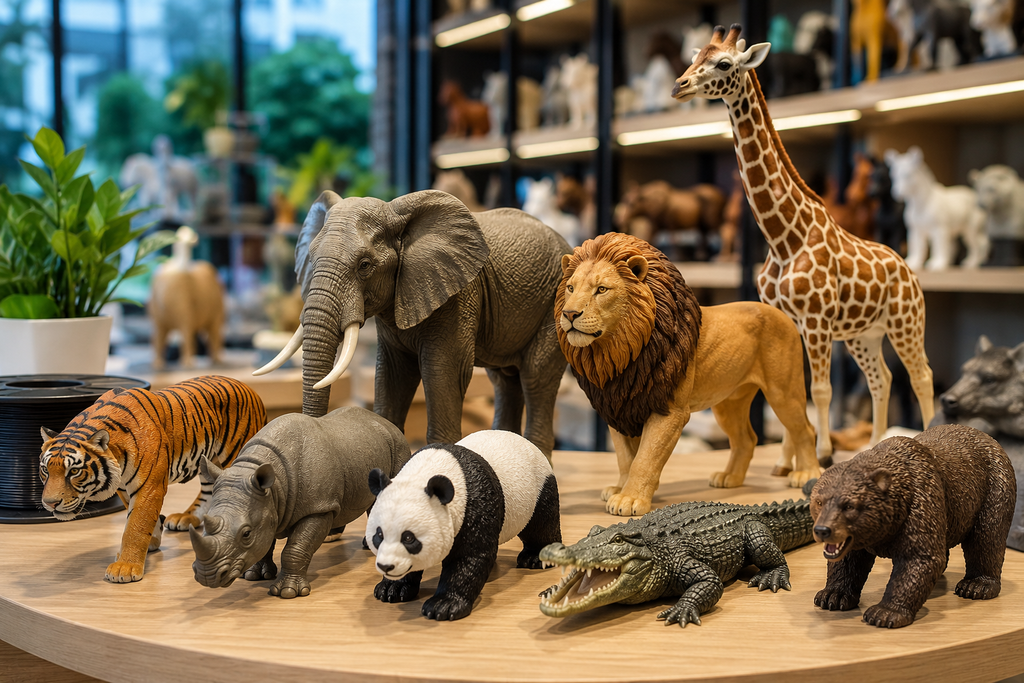
Beyond cost savings, the transition is heavily fueled by the demand for rapid market adaptation. Consumer trends in the collectible space shift notoriously quickly, and retailers cannot afford to be saddled with obsolete inventory. Utilizing 3D printed animals enables a just-in-time manufacturing approach where stock can be replenished based on real-time sales data. This prevents the dreaded dead stock scenario that plagues traditional retail models, ensuring a healthier bottom line and a more efficient warehousing operation.
The aesthetic superiority of these models also plays a crucial role in retailer adoption. Advanced resin and high-end filament printing can capture microscopic details, such as fur textures and scale patterns, that are simply impossible to mold traditionally. Retailers recognize that stocking the best 3D printed animals elevates their brand perception, positioning them as purveyors of high-end art rather than mere toy sellers. This elevation in brand status attracts a more dedicated and higher-spending demographic of collectors.
Furthermore, the sustainability aspect of on-demand production is becoming a significant selling point for environmentally conscious retailers. Because 3D printed animal models are created layer by layer, there is significantly less material waste compared to subtractive manufacturing or injection molding. Retailers can market these eco-friendly production methods to their consumer base, adding an additional layer of value to the physical product. This alignment with global sustainability goals provides a powerful narrative for B2B sales and marketing strategies.
1.2 How Market Projections for 2025 and 2026 Influence Bulk Purchasing
Recent 2025 industry data indicates that the global 3D printed collectibles market experienced a robust 24% year-over-year growth, driven primarily by B2B sector adoption. This statistical surge reflects a broader acceptance of additive manufacturing as a viable mainstream production method rather than a niche prototyping tool. Wholesale buyers are actively using this data to justify larger initial investments in 3D printed animals, knowing that the consumer demand is empirically proven. The data transforms what was once considered a risky innovation into a calculated, data-backed procurement strategy.
Looking toward 2026 market insights, industry analysts project a massive shift toward hyper-customization in the wholesale space. The coming year is expected to see the widespread integration of AI-driven design tools that allow bulk buyers to slightly alter 3D printed animal models at scale—such as changing poses or adjusting base terrain—without incurring traditional redesign fees. Forward-thinking distributors are already adjusting their 2026 purchasing contracts to include flexible customization clauses. This proactive approach ensures they can capitalize on the impending modular design trend.
These projections directly influence how buyers structure their bulk purchasing timelines. Instead of making massive annual purchases based on outdated catalogs, wholesalers are shifting to quarterly micro-buys of the best 3D printed animals. This staggered purchasing strategy allows them to continuously integrate the latest printing technologies and material advancements into their inventory. By aligning their cash flow with the rapid iteration cycles projected for 2025 and beyond, businesses maintain a cutting-edge product lineup.
The anticipated market expansion also means that wholesale pricing structures are becoming increasingly competitive. As more large-scale additive manufacturing facilities come online to meet 2026 demand, the per-unit cost of high-quality 3D printed animals is expected to drop by an estimated 15%. Bulk purchasers are leveraging these future projections in current negotiations, locking in long-term contracts at favorable rates. This strategic foresight guarantees maximum profitability as the market matures and production efficiencies scale globally.
2. Which Customization Features Define the Best 3D Printed Animals
In the realm of B2B collectibles, true customization extends far beyond simply picking a color from a predefined chart. The best 3D printed animals are defined by the ability to alter structural elements, such as the pose, the base environment, and even the proportion of the creature to fit specific retail themes. Wholesale buyers should seek out manufacturing partners who offer parametric design capabilities, allowing for infinite variations of a core model. This level of structural bespoke service is what separates premium collectible lines from generic shelf-fillers.
Surface finishing customization represents another critical pillar of a high-value wholesale offering. A raw print is rarely ready for retail display, making the post-printing finishing options a major defining factor. Buyers must evaluate whether a supplier can offer varied texturing techniques, from high-gloss automotive finishes to matte, stone-like feels for 3D printed animal models. Providing retailers with a menu of finishing options allows them to segment their inventory into different price tiers, maximizing the monetization of their shelf space.
Branding and packaging integration is an often-overlooked but vital customization feature for wholesale success. The ability to seamlessly embed a corporate logo into the base of a 3D printed animal, or to design custom blister packaging that perfectly contours to the model, adds immense B2B value. These bespoke touches eliminate the need for third-party packaging partners, streamlining the supply chain and ensuring a cohesive brand presentation. It is these holistic customization options that make a wholesale partnership truly lucrative.
Ultimately, the defining feature of top-tier customization is scalability. A manufacturer might be able to create a stunning one-off prototype, but the best 3D printed animals are those that can be consistently replicated with those exact custom specifications across thousands of units. Wholesale buyers must rigorously vet a supplier’s ability to maintain color fidelity, dimensional accuracy, and structural integrity throughout a large production run. Without guaranteed scalability, customization becomes a liability rather than a selling point.
2.1 How Material Selection Impacts Wholesale 3D Printed Animals
The choice of raw material dictates not only the aesthetic outcome but also the logistical viability of shipping 3D printed animals in bulk. Photopolymer resins, for instance, offer unparalleled detail capture, making them ideal for intricate 3D printed animal models like reptiles or insects. However, some standard resins can become brittle during transit, posing a high risk of breakage for wholesale shipments. B2B buyers must work closely with manufacturers to select advanced, flexible resins that maintain microscopic detail while surviving the rigors of global freight.
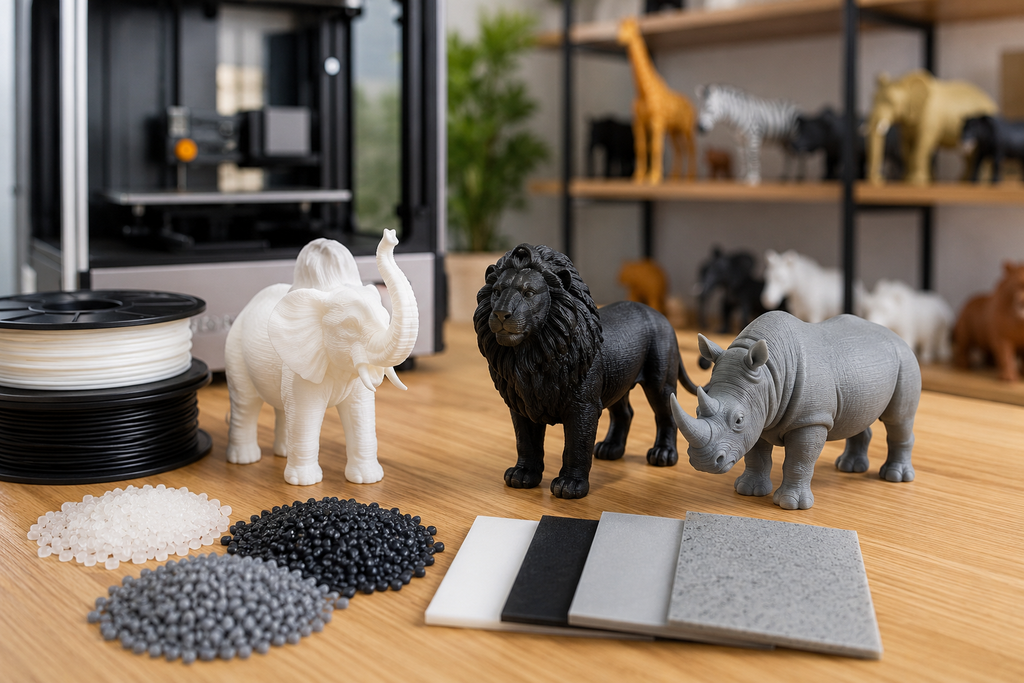
Thermoplastic filaments, such as ABS and PETG, present a different set of wholesale advantages, primarily centered around durability and cost-efficiency at scale. While they may require more aggressive post-processing to hide layer lines, the resulting 3D printed animals are incredibly robust. This makes them perfectly suited for larger collectibles, educational tools, or display pieces that will be frequently handled by end consumers. Understanding the mechanical properties of these plastics allows wholesalers to match the right material to the right target demographic.
The tactile experience of the final product is also heavily dictated by material selection, directly impacting consumer perception of value. Modern composite materials, such as wood-filament or marble-filament blends, are gaining massive traction in the 2025 B2B market. These materials allow 3D printed animal models to possess a weight and texture that mimics organic or premium substances. Wholesalers who curate collections using these exotic material blends can command significantly higher retail prices and attract discerning collectors.
Furthermore, material selection has profound implications for long-term inventory stability and archival quality. Cheaper plastics can degrade under UV light or suffer from thermal warping in non-climate-controlled warehouses. When sourcing the best 3D printed animals, B2B buyers must inquire about the UV resistance and thermal stability of the chosen materials. Utilizing archival-grade resins and UV-inhibitive coatings ensures that the wholesale inventory maintains its pristine condition and retail readiness over extended storage periods.
2.2 Why Scalable Customization Matters for B2B Buyers
Scalable customization is the bridge between bespoke artistry and profitable mass distribution. In the B2B sector, a buyer may love a customized prototype of a 3D printed animal, but if the factory cannot produce 5,000 identical units with the same bespoke features, the project fails. Scalability ensures that the exact nuances approved in the sampling phase—such as a specific paint wash on a dinosaur model—are flawlessly executed on a mass production line. This consistency is vital for maintaining brand trust with the end retailer.
The financial implications of scalable customization are highly favorable for wholesale buyers. Traditional manufacturing dictates that customization exponentially increases the cost per unit as volume rises. Conversely, in additive manufacturing, once a customized 3D printed animal model is digitized and the print parameters are locked in, the marginal cost of producing the next thousand units remains remarkably stable. This inverted economic model allows wholesalers to offer highly personalized products without sacrificing their bulk-purchasing margins.
From an operational standpoint, scalable customization reduces the complexity of managing a vast product catalog. Instead of warehousing hundreds of slightly different SKUs of 3D printed animals, a wholesaler can hold a base inventory and apply customization on demand. This configure-to-order approach drastically reduces warehouse footprint and overhead costs. It empowers the B2B buyer to promise their retail clients a vast array of options while maintaining a lean, efficient physical inventory.
Market responsiveness is the ultimate reason scalable customization is non-negotiable for modern B2B buyers. If a specific geographic region suddenly demands a localized variation of 3D printed animal models—such as a regional mascot or an endemic species—a scalable custom operation can fulfill that request in days, not months. This agility transforms a wholesale distributor from a passive inventory holder into a reactive, market-leading provider capable of capitalizing on sudden consumer trends.
3. How to Evaluate Quality When Sourcing 3D Printed Animal Models
Quality evaluation in additive manufacturing requires a different skill set than assessing traditional injection-molded goods. The first critical metric is dimensional accuracy, ensuring that the physical 3D printed animals precisely match the digital CAD files provided. Even a minor deviation of a few millimeters can ruin the interlocking parts of a complex model, such as a detachable base or articulated jaw. Wholesale buyers must implement rigorous digital caliper testing during the initial sampling phase to guarantee geometric fidelity across the entire batch.
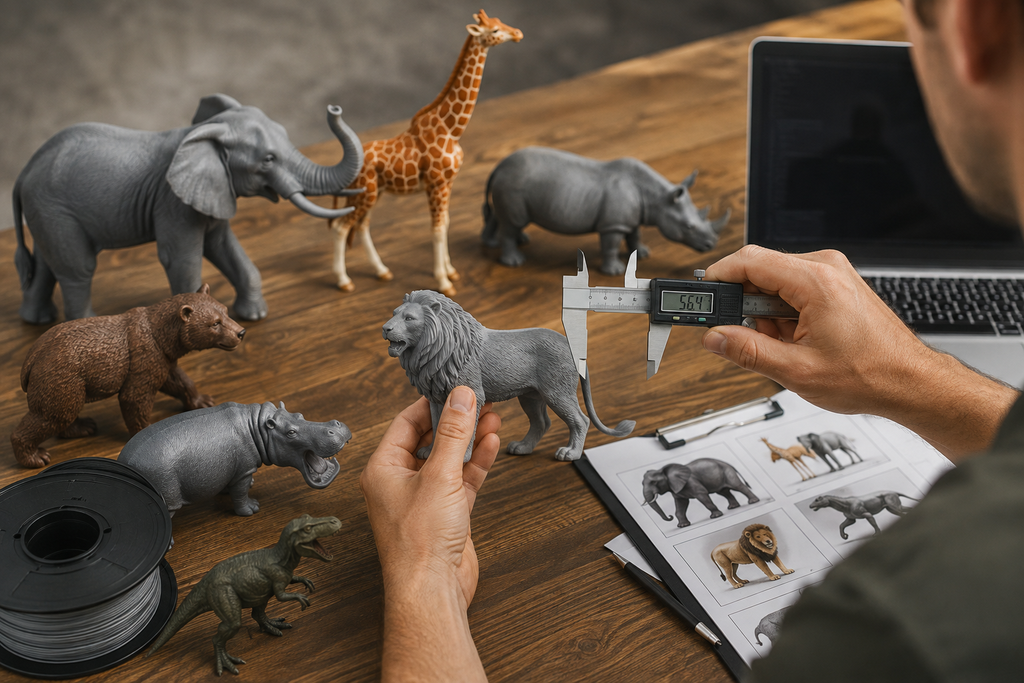
Surface finish quality is the most immediate visual indicator of a premium product. Evaluators must inspect 3D printed animal models for prominent layer lines, stringing between moving parts, or incomplete infill that causes pocking on flat surfaces. The best 3D printed animals will exhibit a surface that requires minimal filler or sanding before painting, indicating a high level of machine calibration and operator expertise. A thorough visual audit under various lighting conditions is essential to ensure the models meet high-end retail standards.
Structural integrity testing goes beyond just looking at the model; it involves simulating the stresses of the retail environment. Wholesale buyers should apply controlled pressure to the delicate extremities of 3D printed animals, such as horns, tails, and thin legs, to test for snapping or warping. This mechanical evaluation ensures that the models can withstand being unboxed, placed on a display shelf, and potentially handled by curious consumers without suffering catastrophic failure. A fragile model leads to high return rates and damaged retailer relationships.
Finally, quality evaluation must encompass the consistency of the finishing processes, particularly painting and sealing. A common pitfall in mass-producing 3D printed animal models is color drift, where the hue of the paint changes slightly between the first batch and the last. B2B buyers must demand standardized color matching using Pantone or RAL codes and require strict quality control photos at multiple stages of the production run. This guarantees that every unit in the wholesale shipment maintains the exact approved aesthetic.
3.1 Why Layer Resolution Determines the Value of 3D Printed Animals
Layer resolution, measured in microns, is the foundational technical specification that dictates the ultimate value of the collectible. A lower micron count results in smoother transitions between layers, completely eliminating the stepped or ribbed texture that plagues cheap 3D printed animals. For high-end B2B collections, where consumers are paying a premium, a resolution of 25 to 50 microns is typically the baseline requirement. This ultra-fine resolution captures the microscopic topography of animal skin, scales, and fur, creating a truly lifelike replica.
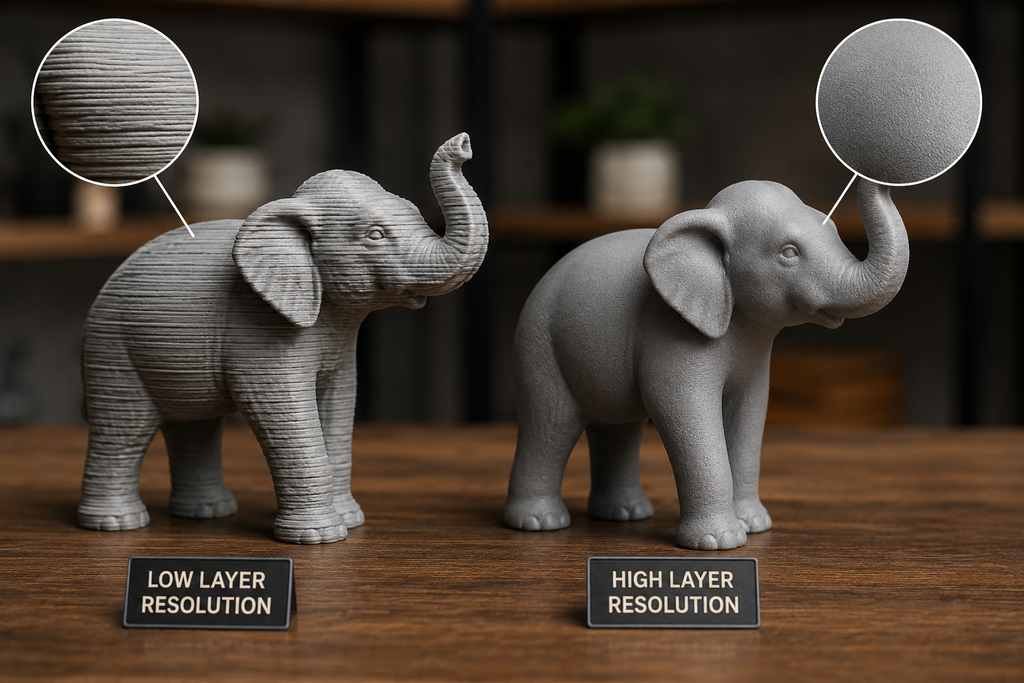
The impact of layer resolution extends far beyond mere aesthetics; it directly affects the amount of costly post-processing labor required. Models printed at a coarse resolution of 100+ microns require extensive manual sanding, priming, and filling to achieve a smooth surface, which exponentially increases the per-unit cost and production time. By sourcing 3D printed animal models printed at high resolutions, wholesalers effectively bypass these labor-intensive steps. This efficiency translates directly into a higher profit margin and a faster turnaround time from factory to warehouse.
From a collector’s perspective, layer resolution is a tangible metric of authenticity and premium quality. Serious collectors often inspect their acquisitions with magnifying glasses or macro lenses, and poor layer resolution is an immediate dealbreaker. When wholesalers stock the best 3D printed animals, they are providing a product that passes this intense scrutiny. The microscopic precision achieved through high-resolution printing justifies the premium retail price point and fosters a reputation for excellence within the collector community.
Furthermore, high layer resolution is critical for preserving the integrity of complex geometries and undercuts. Many 3D printed animal models feature intricate elements like overlapping feathers, curled tongues, or inward-facing details. If the layer resolution is too coarse, these delicate features can blob together or fail to print entirely. By prioritizing high-resolution manufacturing, B2B buyers ensure that the artist’s original intricate vision is fully realized in the physical product, maximizing its market appeal.
3.2 How Post-Processing Elevates Standard 3D Printed Animal Models
Post-processing is the transformative stage that turns a raw, fragile print into a retail-ready masterpiece. The initial step typically involves removing support structures and sanding the 3D printed animals to create a uniform, seamless surface. This labor-intensive phase requires skilled technicians who understand how to work with complex geometries without destroying fine details. For B2B buyers, a manufacturer’s post-processing capability is often a more accurate indicator of final product quality than the printers themselves.
Advanced painting techniques, such as airbrushing, dry brushing, and wash application, are what inject true realism into 3D printed animal models. A skilled paint job can create depth, highlight muscle groups, and simulate organic weathering that raw plastic cannot convey. Wholesale buyers should seek out partners who employ professional miniature painters rather than automated dipping methods. The hand-applied artistic nuance is what elevates a standard model into a coveted art piece, dramatically increasing its perceived wholesale value.
Protective clear-coating is a crucial, yet frequently overlooked, post-processing step that ensures the longevity of the product. UV-resistant clear coats protect the intricate paint jobs of 3D printed animals from fading under retail display lighting, while matte finishes prevent unsightly glare that can obscure details. By specifying exact topcoat finishes in their B2B contracts, wholesalers can guarantee that the models will look as pristine three years later as they did on the day they were unboxed. This durability is a key selling point for both B2B and B2C transactions.
Finally, specialized effects like glowing eyes, simulated water, or faux-metallic armor can be integrated during post-processing to create ultra-premium tiers of 3D printed animal models. These bespoke additions require a high degree of technical coordination between the printing and finishing departments. By offering these elevated, post-processed tiers, wholesalers can effectively segment their catalog into standard, premium, and luxury lines. This strategic product tiering maximizes the revenue extracted from every unique digital model in the inventory.
4. Which Sourcing Strategies Secure the Best 3D Printed Animals for Collections
Identifying the right manufacturing partner requires moving beyond generic B2B marketplaces and seeking out specialized additive manufacturing facilities. The best 3D printed animals are rarely produced by generalist factories that print everything from phone cases to automotive parts. Wholesale buyers should target studios that exclusively focus on collectibles, miniatures, or zoological replicas, as these facilities possess the niche expertise and calibrated equipment necessary for high-fidelity output. A targeted sourcing strategy yields exponentially better results than casting a wide net.
Vetting a potential supplier’s technological infrastructure is a non-negotiable step in the sourcing process. Buyers must determine whether a facility utilizes SLA (Stereolithography) or FDM (Fused Deposition Modeling) technology, as each has profound implications for the quality of 3D printed animal models. SLA is generally preferred for high-detail, smaller collectibles, while advanced FDM might be suitable for larger, structural pieces. A comprehensive sourcing strategy involves matching the specific animal model requirements to the precise technological capabilities of the factory.
Establishing clear intellectual property (IP) protection protocols is another critical pillar of a successful sourcing strategy. When commissioning custom 3D printed animals, the B2B buyer must retain absolute ownership of the digital files and physical molds. This requires rigorous legal contracting, including Non-Disclosure Agreements (NDAs) and strict clauses preventing the supplier from selling the same models to competitors. Securing IP ensures that the customization investment yields an exclusive competitive advantage in the wholesale market.
A robust sourcing strategy also incorporates a phased quality assurance protocol rather than a single final inspection. Smart buyers require in-process photos at the printing, cleaning, and painting stages of 3D printed animal models. This iterative oversight allows wholesalers to catch and correct errors early in the production cycle, rather than discovering a systemic flaw after thousands of defective units have been boxed. Proactive communication and milestone-based approvals are the hallmarks of a highly effective sourcing partnership.
4.1 How to Partner with Specialized Customization Manufacturers
Initiating a partnership with a specialized manufacturer requires presenting a comprehensive, professional brief that goes beyond simple reference images. To produce the best 3D printed animals, the factory needs detailed specifications regarding target demographics, desired material feel, and precise dimensional constraints for retail packaging. Providing this level of detail upfront signals to the manufacturer that the buyer is a serious, high-volume B2B client, which often results in prioritized service and better pricing negotiations.
Developing a collaborative relationship, rather than a purely transactional one, unlocks the true potential of a customization partnership. Specialized manufacturers have deep technical knowledge regarding what is structurally feasible in additive manufacturing. By engaging them in the design phase of 3D printed animal models, buyers can avoid designing features that are impossible to print or prone to breaking. This engineering collaboration reduces development time and results in a vastly superior, production-optimized final product.
Negotiating flexible production runs is a key strategy when working with bespoke manufacturers. The inherent advantage of 3D printing is the lack of mold fees, which should theoretically allow for economical reordering of 3D printed animals in batches as small as fifty or one hundred units. B2B buyers must negotiate contracts that reflect this agility, avoiding rigid minimum order quantities that belong to the injection molding era. This flexibility allows wholesalers to keep their collections fresh and responsive to sudden spikes in consumer demand.
Establishing a dedicated feedback loop post-delivery solidifies the long-term value of the manufacturing partnership. Analyzing which 3D printed animal models sold fastest, which suffered the most shipping damage, and which received the best consumer reviews provides invaluable data. Feeding this real-world retail performance data back to the factory enables continuous refinement of printing parameters and finishing techniques. This iterative, data-driven partnership eventually leads to a streamlined, highly profitable supply chain.
4.2 Why Strategic Sourcing Future-Proofs Your 3D Printed Animal Inventory
Strategic sourcing insulates wholesale buyers from the volatility of global supply chain disruptions. By diversifying 3D printed animal models across multiple specialized, geographically distributed additive manufacturing hubs, businesses avoid the single-point-of-failure risk inherent in traditional overseas manufacturing. If one facility experiences delays, the digital nature of the inventory allows production to be instantly rerouted to another partner. This logistical resilience ensures that collections remain fully stocked regardless of external geopolitical or economic shocks.
The digital nature of strategically sourced additive manufacturing fundamentally changes inventory accounting from a capital expense to an operational one. Instead of tying up massive amounts of capital in physical warehouse stock, wholesalers can pay to store their 3D printed animals as digital files on a manufacturer’s servers. When a retail order comes in, the file is printed and shipped on demand. This strategic shift drastically improves cash flow and reduces the financial risk associated with holding depreciating physical inventory.
Aligning sourcing strategies with emerging consumer trends ensures long-term relevance in a fickle collectibles market. By partnering with factories that are actively investing in next-generation technologies—such as full-color voxel printing or sustainable, algae-based resins—wholesalers position themselves at the bleeding edge. These forward-looking sourcing agreements guarantee that when these innovative technologies become standard consumer expectations in 2026, buyers will be fully prepared to immediately deploy the most advanced 3D printed animal models to the market.
Ultimately, strategic sourcing elevates the wholesale distributor from a mere reseller to a visionary brand curator. By carefully selecting cutting-edge customization technologies and applying them to 3D printed animal models, a business creates a unique brand identity that traditional competitors cannot easily replicate. This distinct market positioning ensures customer loyalty, higher profit margins, and a sustainable competitive advantage in the ever-evolving landscape of professional collectibles.
How to Finalize Your 3D Printed Animal Procurement Strategy
Successfully integrating these collectibles into your wholesale catalog requires a meticulous balance of advanced quality evaluation, scalable customization, and forward-looking supplier partnerships. By prioritizing high-resolution 3D printed animal models and aligning with specialized manufacturers who understand B2B demands, distributors can secure a highly profitable, agile inventory that outpaces traditional manufacturing limitations. The transition toward on-demand, bespoke production is no longer a future concept but a current market reality that dictates wholesale success. To capitalize on this shift and future-proof your product lines, contact our specialized B2B customization team today to request an exclusive sample kit of the best 3D printed animals and discover how tailored additive manufacturing can elevate your brand.
Frequently Asked Questions
1: How Do I Source the Best 3D Printed Animals for Wholesale?
Sourcing the best 3D printed animals requires identifying specialized additive manufacturing facilities rather than generalist factories. Wholesale buyers should prioritize partners that focus exclusively on high-fidelity collectibles, possess advanced SLA or high-resolution FDM capabilities, and have a proven track record of scaling bespoke designs into mass production.
2: Why Should B2B Buyers Focus on Customization for 3D Printed Animals?
Customization allows B2B buyers to offer unique products that stand out in a saturated retail market. By altering poses, bases, or finishes, wholesalers can create exclusive 3D printed animals for different regions or retail tiers, effectively bypassing the rigid limitations and massive tooling costs associated with traditional injection molding.
3: Which Materials Are Recommended for Bulk 3D Printed Animal Models?
The choice of material depends on the intended use and shipping requirements of the 3D printed animal models. Photopolymer resins are highly recommended for intricate, smaller collectibles due to their superior detail capture, while advanced thermoplastics like PETG or ABS are better suited for larger, durable display pieces that must withstand frequent handling and global freight.
4: How Does Layer Resolution Affect the Wholesale Value of 3D Printed Animals?
Layer resolution, measured in microns, directly dictates the surface smoothness and fine detail retention of 3D printed animals. High-resolution printing eliminates visible layer lines, reducing the need for costly manual post-processing while significantly elevating the perceived premium value of the collectible for discerning consumers.
5: Why Are 2025 and 2026 Pivotal Years for 3D Printed Animal Models?
Recent 2025 industry data shows a 24% growth in additive manufacturing adoption by the B2B sector, while 2026 market insights project a major shift toward AI-driven hyper-customization. These years mark the transition of 3D printed animal models from niche novelty items to mainstream, highly profitable wholesale commodities.
6: How Can I Ensure Quality Control in Large Batches of 3D Printed Animals?
Ensuring quality control requires implementing a phased, milestone-based inspection protocol rather than relying solely on a final check. Wholesale buyers should demand in-process photos at the printing, cleaning, and painting stages, along with standardized color matching using Pantone codes, to guarantee consistency across all 3D printed animals.
7: Which Post-Processing Techniques Are Essential for the Best 3D Printed Animals?
Essential post-processing steps include precision sanding to remove support marks, advanced airbrushing or wash techniques to create realistic depth, and the application of UV-resistant clear coats. These finishing touches transform raw 3D printed animal models into retail-ready art pieces that command higher price points.
8: Why Is Scalability Important When Customizing 3D Printed Animal Models?
Scalability ensures that a manufacturer can flawlessly replicate a bespoke prototype across thousands of units without losing dimensional accuracy or color fidelity. Without scalable customization, wholesalers risk receiving inconsistent 3D printed animals, which damages brand trust and leads to high return rates from retail partners.
9: How Do I Protect My Intellectual Property When Sourcing 3D Printed Animals?
Protecting intellectual property requires executing stringent legal contracts, including Non-Disclosure Agreements (NDAs), before sharing any digital CAD files. B2B buyers must explicitly retain ownership of all digital assets and physical molds to prevent suppliers from selling their custom 3D printed animals to competing distributors.
10: Which Sourcing Strategy Best Future-Proofs a 3D Printed Animal Inventory?
Future-proofing an inventory involves diversifying production across multiple specialized additive manufacturing hubs and transitioning toward a digital, on-demand fulfillment model. This strategy minimizes supply chain disruptions and allows wholesalers to quickly adapt their 3D printed animal collections to sudden shifts in consumer demand.